iwoca launches Credit Compass to help millions of SMEs understand and improve their business credit score
5
min read
iwoca launches Credit Compass to help millions of SMEs understand and improve their business credit score
March 16, 2026


- 21% of business owners admit they don't understand their credit score (~1.1 million UK SMEs). 30% either haven't checked it at all or recently, suggesting more than half (51%) may lack a clear picture of their financial health.
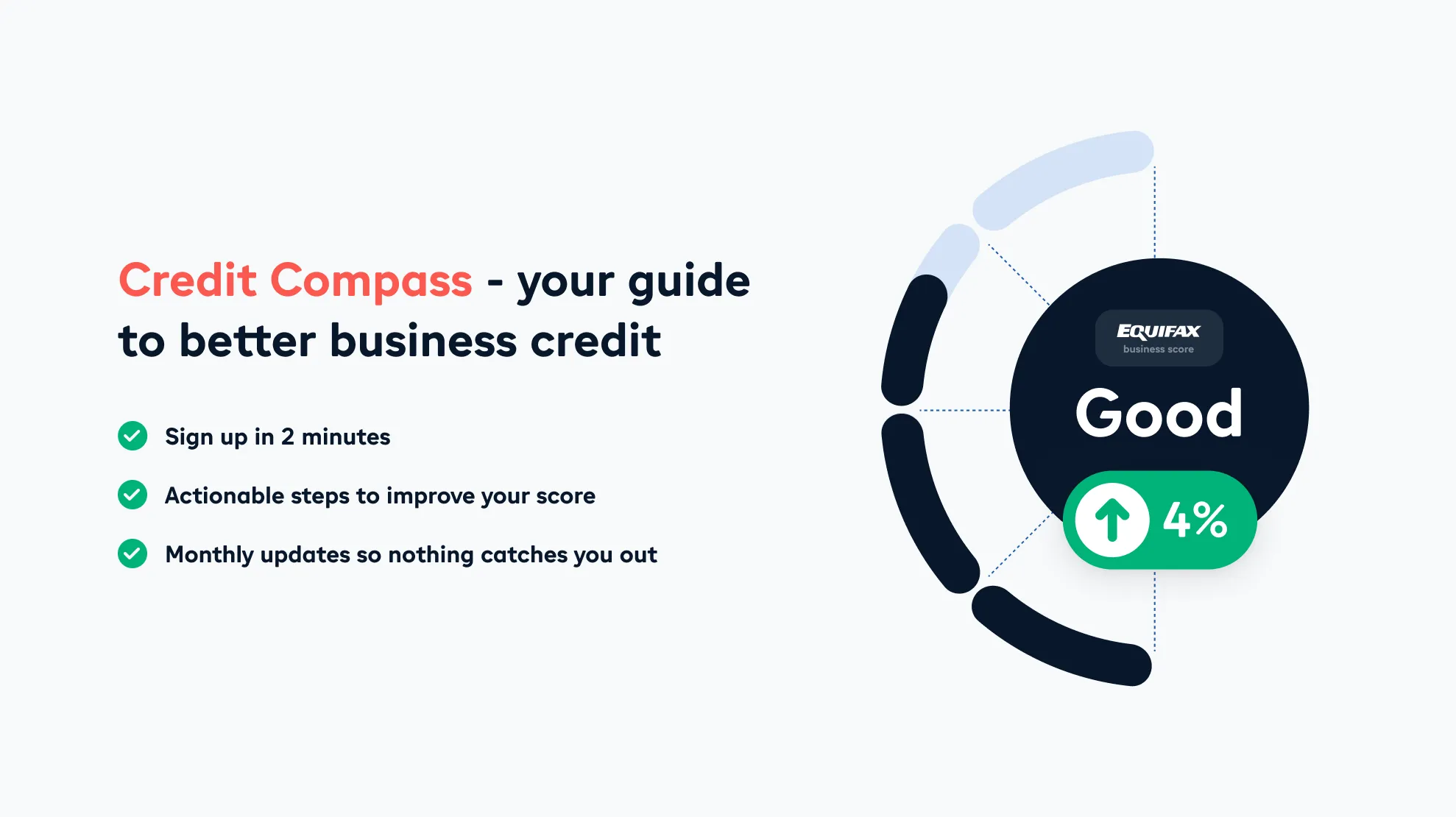
- This comes as iwoca announces its Credit Compass - a free tool to help all UK limited businesses better understand their financial health.
- Credit Compass will offer every UK SME access to monthly updates of their Equifax business credit score, credit history, financial status and Companies House assessment all in one place.
New research from iwoca, one of Europe’s leading SME lenders, reveals that a significant proportion of UK SMEs lack a clear understanding of their own financial health - a gap that could put their success at risk.
New SME research from iwoca shows that 51% of UK businesses either haven’t checked their credit score (30%) recently or are unsure what it means (21%). Only 20% of business owners trust credit agencies to assess their business’s health.
In a separate study of finance experts, iwoca’s latest SME Expert Index (Feb ‘26) reveals that most brokers believe rejected businesses often lack both understanding of why their finance applications have been unsuccessful (62%) and guidance on improving their creditworthiness (71%).
To bridge these knowledge gaps and empower small business owners to actively manage their financial health, iwoca is launching Credit Compass - a free tool designed to give every UK SME clear insight into their business’s credit standing. iwoca’s Credit Compass not only shows small businesses their credit data and how it evolves over time, but also explains what it means and what to do next to improve it. The free tool provides a breakdown to SMEs of the following categories:
- Equifax Business Credit Score: instantly shows business owners how lenders view their business’ creditworthiness.
- Credit History: tracks business owners’ reliability in managing payments and credit, helping build trust with funders and suppliers.
- Financial Status: measures business owners’ cash flow strength and resilience - their ability to weather financial ups and downs.
- Companies House Assessment: checks business owners’ stability and credibility using official public records.
Later this year, Credit Compass will integrate with Open Banking, allowing SMEs to securely connect their business accounts. This will enable iwoca to help businesses uncover valuable operational insights and make recommendations on how to strengthen their credit-worthiness.
Christoph Rieche, CEO and co-founder at iwoca, commented: "It’s concerning that more than half of all business owners neither understand nor monitor the credit score of their business. One of the reasons is that business credit scores have historically been unreliable, therefore business owners may have learned to ignore them. We’re committed to making them reliable and actionable over time, our massive data warehouse and experience in SME lending puts us into an ideal position to solve this problem. If successful then millions of SMEs will benefit from it.”
Olusegun Shiroye, founder of Bolfis Limited commented: “Business owners shouldn't be flying blind, especially in such a tough economic environment. I’d never tracked my business’s financial health before - which may have stifled some of my growth over the years - but iwoca’s tool was straightforward to use and breaks everything down into categories that actually make sense. It’s definitely a useful resource for keeping tabs on where your business stands - and it’s free, so why not use it?”
Businesses can use the Credit Compass today.







How to use payroll loans for small businesses


Business Loans comparison: High Street Banks vs. Alternative Lenders
Comparing the pros and cons of getting a business loan from traditional lenders and alternative finance providers, including how they differ in application processes, speed of funding, rates and flexibility.
Working capital ratio
Discussing the importance of calculating your company’s working capital ratio, what it represents and how to improve the ratio.
